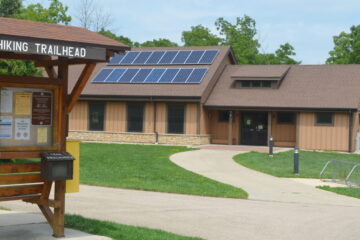
Adaptive Restoration conducted a prescribed burn in early April 2026 at Blue Mound State Park to encourage the establishment of native species and assist in the restoration efforts of Swain, Upper Walnut, and the pool prairies. Following up the prescribed burns with invasive species management has greatly benefited the prairies over the last three years and reduced non-native species that compete for light, water, and other resources. Continued management of Reed Canary Grass, Crown Vetch, Spotted Knapweed, and biennial weeds has significantly reduced the density of these non-native species throughout much of these restored prairies. The Adaptive Restoration team has utilized these early-spring prescribed burns to begin invasive species management while most native vegetation is still dormant, and the risk of “friendly fire” while spraying is low.
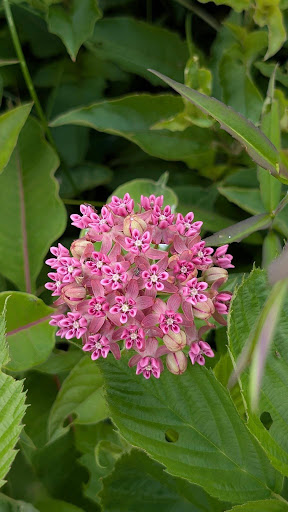
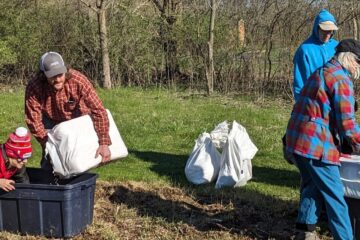
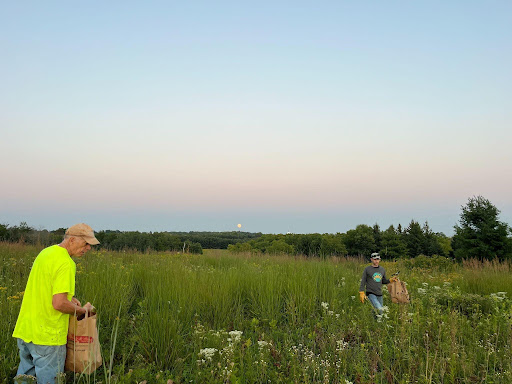
This summer we have held four volunteer work parties. In June, volunteers pulled and bagged Reed Canary Grass seedheads in Swain prairie to limit its spread. In July, volunteers pulled and removed Wild Parsnip, White Sweet Clover, hedge parsley, and Spotted Knapweed in Upper Walnut prairie. In August and September, volunteers collected seed in Upper Walnut Prairie and the Pool Prairie, including Golden Alexanders, Beebalm, False Sunflower, White and Purple Prairie Clovers, Tall Thimbleweed, Purple coneflower, and Prairie blazingstar. The seeds will be used to help fill in areas where introduced species have been removed and promote diversity throughout the prairies.
Swain prairie
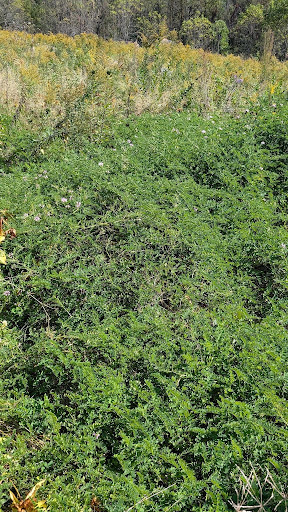
- Crown Vetch has been drastically reduced through repeated management in 2025 and 2026 but will be an ongoing management effort. Large mats that previously covered large areas of Swain prairie and smothered native seedlings have been eradicated and only small patches remain. Overall, Crown Vetch has been reduced by 95%.
- Occasional Wild Parsnip and Sweet Clover are still present but haven’t produced flowers or seed this year thanks to continued management.
- There are some isolated patches of Reed Canary Grass that persist but they have not continued to spread. Repeated burning has reduced the heavy thatch made by Reed Canary and allowed native species to begin to establish.
- Woody species are popping up occasionally in the prairie, and the transition from prairie to woodland could be softened to create more edge habitat for wildlife. Creating transition zones allows for more biodiversity, and more species to utilize these spaces.
- Work can be done this fall to improve the firebreak volunteers made through the woods last winter and reduce dead wood materials along the firebreak to ensure safe burning.
Upper Walnut prairie
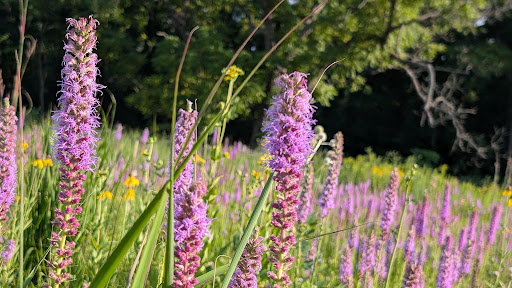
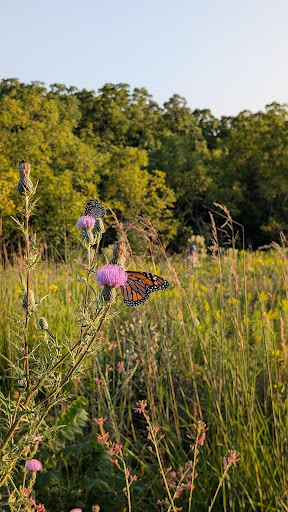
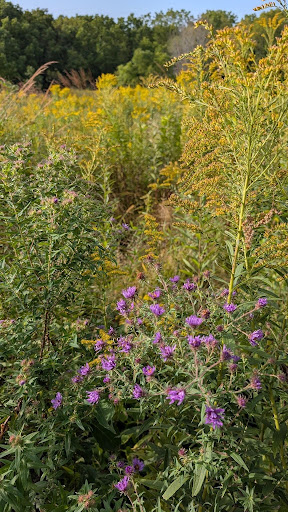
- Native plants are thriving and cover ~95% of the prairie. The Blazingstar blooms this year were breathtaking. Bottle Gentian, Cream Gentian and Stiff Gentian, Coneflowers, Mountain mint and asters have really taken off and created a great display and resource for pollinators from spring to fall.
- Birdsfoot Trefoil persists in a few isolated patches of the prairie and will need continued management.
- Crown Vetch has been reduced through much of the prairie but will need continued management in the pockets where it maintains a foothold.
- Spotted Knappweed, Wild Parsnip, Hedge Parsley, and Sweet Clover have been reduced due to management efforts, but management will need to be ongoing to address the persistence of these species in the seed bank, and the proximity of this site to the road which allows for introduced seed.
- There are some woody species including Sumac, Autumn Olive, and immature Walnut trees encroaching into the prairie from the wooded edges that will be managed this fall.
- Last winter the Friends group and Park worked to remove the brush line between Pleasure Valley prairie and Upper Walnut prairie. This has improved habitat connectivity between the two prairies. More work could be done this winter and beyond to further blend these prairie habitats and create larger spaces for grassland nesting birds. Reducing the invasive brush that surrounds these prairies will also limit the seed that allows for encroachment. Some of the seed collected by volunteers this fall will be used in this recently cleared area.